


Why Homejoy failed comes down to one broken week in July 2015 but the real story starts two years earlier. Homejoy, a San Francisco cleaning startup that had raised nearly $40 million and booked cleanings in 35 cities across four countries, told its staff, in a single blog post, that it was done. No auction, no dramatic bankruptcy hearing, no last-minute rescue. Just a company that had been called Y Combinator’s fastest-growing startup, gone in two weeks.
In short: its core economics never worked. It acquired most customers through deep $19 discount cleanings that lost money on nearly every booking, then legally couldn’t train the independent contractors doing the work which wrecked retention while four worker-misclassification lawsuits scared off the funding it needed to survive.
This piece traces Homejoy’s rise from a Y Combinator side project called Pathjoy to a media darling for $25–$35-an-hour house cleaning, the internal cracks that never made it into the press coverage, the specific week everything fell apart, and what the gig economy has done differently since including at Homejoy’s own chief rival.
AT A GLANCE
- Founded: 2012 (as Pathjoy, out of Y Combinator’s 2010 batch)
- Founders: Adora Cheung (CEO) and Aaron Cheung (VP of Growth)
- Total raised: ~$40 million (Google Ventures, Redpoint Ventures, First Round Capital, Max Levchin, others)
- Shut down: Announced July 17, 2015; ceased operations July 31, 2015
- Root cause: Discount-driven customer acquisition with negative unit economics, compounded by worker-misclassification lawsuits that froze a Series C
Table of Contents
BACKGROUND & CONTEXT
Adora Cheung and her brother Aaron Cheung entered Y Combinator in 2010 with a startup called Pathjoy, originally built to connect people with online life coaches. It didn’t work. What did work, almost by accident, was the side business the siblings ran to keep the lights on: cleaning houses themselves and dispatching a small crew of contractors to do the same. Y Combinator funded the pivot, and the Cheungs relaunched under the name that would stick: Homejoy a name that, within three years, would become shorthand in Silicon Valley for how fast a well-funded startup can fail.

The company formally began operating in 2012, going after a genuinely large, genuinely broken market. House cleaning in the U.S. was and remains a roughly $400 billion industry, dominated by word-of-mouth referrals, Craigslist listings, and franchise operators like Merry Maids. There was no dominant online booking platform. Homejoy’s pitch was simple: book a vetted cleaner online in under a minute, pay a flat hourly rate, skip the phone tag. It’s a genuinely good pitch which is part of why understanding why Homejoy failed matters more than dismissing it as a bad idea.
Adora Cheung insisted on doing the first cleaning jobs herself, and continued taking at least one cleaning shift a month even after the company had grown past 100 employees a detail Homejoy leaned on heavily in early press, including a widely shared Fast Company profile about new hires being required to do a test cleaning as part of onboarding.
Early funding was modest by Silicon Valley standards: an undisclosed Y Combinator check in 2010, then roughly $1.7 million in seed funding in early 2013. That capital bought Homejoy just enough runway to prove the model could scale and to attract the much larger round that would define its public narrative.
THE RISE
Homejoy’s breakout moment came in December 2013, when the company announced it had raised $38 million across a Series A led by Google Ventures and a Series B led by Redpoint Ventures, disclosed together because they’d closed within roughly two months of each other. Combined with earlier funding, Homejoy told TechCrunch it had now raised a total of $40 million. Max Levchin, PayPal’s co-founder, First Round Capital, Oliver Jung, and Mike Hirshland all participated.
The money bought speed, and speed is what makes Homejoy’s later collapse so jarring. By 2014, Homejoy operated in more than 30 cities across the United States, Canada, the United Kingdom, Germany, and France, and had shipped an iPhone app. Coverage piled up in Forbes, The Wall Street Journal, and even Oprah Magazine and The Rachael Ray Show the kind of consumer-lifestyle press that on-demand startups coveted because it signaled mainstream, not just tech-industry, appeal.
Inside Silicon Valley, Homejoy carried a specific kind of prestige: it was frequently cited as one of the fastest-growing companies to come out of Y Combinator’s accelerator, a reputation that made it a template other “Uber for X” startups pointed to when pitching investors on physical, offline services.
By this point, on-demand labor marketplaces were the defining startup category of the moment Uber, Instacart, Postmates, and Homejoy’s direct rival, Handy (formerly Handybook), were all racing to prove that software could coordinate blue-collar work at internet scale. Homejoy looked, from the outside, like one of the category’s clear winners which is exactly why its business failure less than two years later caught so many people off guard.
THE CRACKS APPEAR: HOMEJOY’S WORKER CLASSIFICATION LAWSUITS BEGIN
The public narrative was growth. The internal reality and the real answer to why Homejoy failed was a business that lost money on the majority of the customers it acquired.
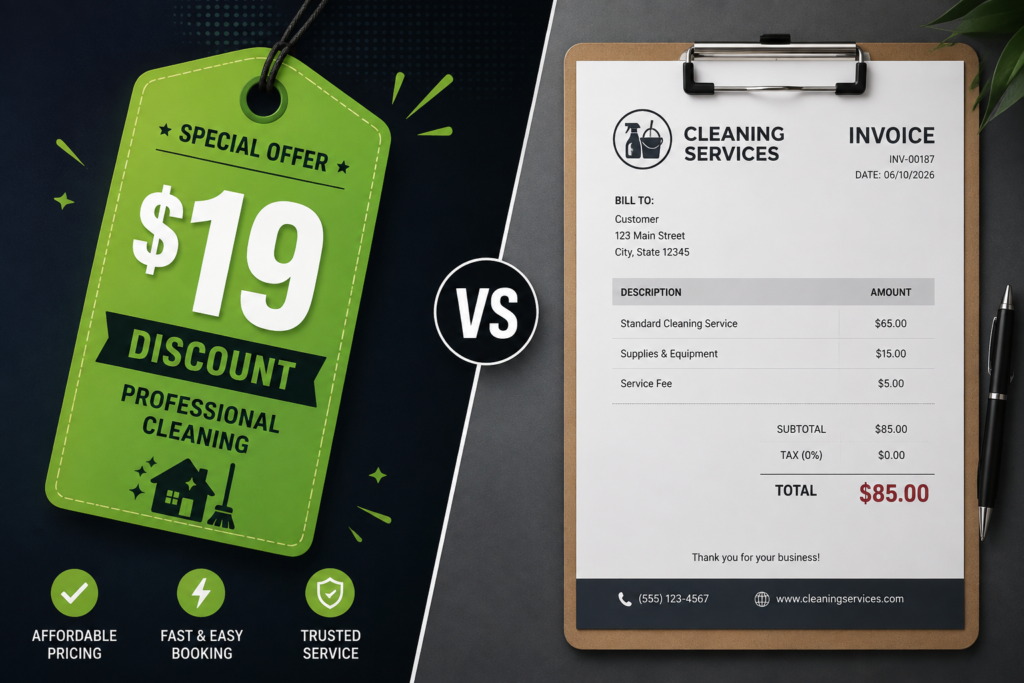
By mid-2014, according to reporting by Christina Farr, Homejoy was selling first-time cleanings for $19.99 through daily-deal sites like Groupon against a market rate of roughly $85 for a comparable cleaning. Former operations manager Anton Zietsman told reporters the company was well aware that daily-deal customers rarely convert into repeat business. Homejoy ran the promotions anyway, chasing growth numbers investors wanted to see.
The scale of the dependency was severe. Forbes reported that roughly 75% of Homejoy’s bookings came from discounts deal sites or on-site promo codes rather than referrals or organic search. Only about 15% to 20% of customers rebooked within a month, former employees said, compared with an estimated 35% to 45% at Handy. “Retention was clearly bad, and that’s what killed us,” one former employee told Forbes.
Retention was hurt further by a structural problem Homejoy couldn’t easily escape. Because its cleaners were classified as independent contractors rather than employees, the company was legally barred from giving them standardized training doing so risks courts deciding the company was exercising employer-level control, which would undercut the contractor classification. That meant cleaning quality varied wildly by worker, and a single bad cleaning could permanently lose a customer in a way a single bad rideshare trip rarely does.
Homejoy knew this and tested workarounds. In one Chicago pilot, the company trained cleaners to leave a branded bed fold and small welcome gifts a move that reportedly improved customer feedback substantially but also pushed further into the kind of direction-and-control territory that invites misclassification claims.
That legal tension became literal. Starting in 2014, Homejoy was named in four separate lawsuits from cleaners alleging they had been misclassified as independent contractors and denied overtime, reimbursements, and other employee protections part of a wider wave of suits hitting on-demand labor platforms industry-wide. These Homejoy worker classification lawsuits would go on to be cited by Cheung herself as the deciding factor in the shutdown.
THE COLLAPSE: INSIDE THE WEEK HOMEJOY SHUT DOWN
The trigger wasn’t a single event it was several problems converging inside a two-week window in July 2015, the same window in which Homejoy shut down for good.
Homejoy had been trying to close a Series C round to keep growing, but investors were increasingly wary of on-demand labor startups generally. That wariness sharpened in June 2015, when California’s Labor Commission ruled that a specific Uber driver should be classified as an employee, not a contractor a decision that, while narrow in scope, rattled every investor with exposure to the category. Talks of an acquisition by rival Handy also reportedly fell apart without a deal.
On July 17, 2015, Homejoy confirmed on its own blog that it would “officially close its doors on July 31st.” CEO Adora Cheung told Re/code that the deciding factor was the four active worker classification lawsuits, which while none had yet been certified as class actions made fundraising materially harder, on top of the bad timing of the California ruling. It’s the clearest, most direct answer available to why Homejoy failed when it did, rather than a year earlier or later.
Once Homejoy shut down, everything moved fast. The company immediately stopped taking new bookings and began refunding customers with unused credit. Roughly 20 members of its technical team were hired by Google, which was building its own home-services marketplace at the time. The rest of the roughly 200-person staff was let go.
The aftermath produced one more twist that got far less coverage than the shutdown itself. In October 2015, three months after Homejoy closed, co-founder Aaron Cheung quietly bought Homejoy’s customer database and used it to launch a near-identical cleaning startup called Fly Maids populating it with former customers’ names, profiles, and even credit card information without fresh consent. He was identified as the operator only after a former Homejoy user recognized her own saved profile on the new site.
THE VERDICT: WHY DID HOMEJOY REALLY FAIL?
Strip away the individual news cycles, and why Homejoy failed comes down to five compounding causes this is the Homejoy business failure in its most condensed form.
- Broken unit economics. Selling $19 cleanings against an $85 market rate, at a 75% discount-acquisition rate, meant Homejoy was subsidizing the majority of its growth at a loss — a pattern that only works if the resulting customers stick around long enough to become profitable, which they largely didn’t.
- A contractor workforce that couldn’t be trained. Independent-contractor status barred Homejoy from standardizing the one thing that determines repeat business in cleaning: consistent quality. The company was legally stuck between an inconsistent product and a reclassification risk.
- Worker classification lawsuits that froze fundraising. The four active lawsuits didn’t bankrupt Homejoy directly, but they made the company’s core labor model look legally radioactive right as it needed a large new round — at the exact moment California regulators were signaling a crackdown on the same model industry-wide.
- Overexpansion before fixing the fundamentals. Homejoy scaled to 35 cities across four countries while its core retention problem remained unsolved, multiplying the same unprofitable customer-acquisition pattern across every new market instead of containing it.
- Disintermediation. Some clients and cleaners, once matched through the platform, cut Homejoy out and arranged cleanings directly — a common risk in service marketplaces where the platform’s value is mostly in the introduction, not the ongoing relationship.
HOW GIG ECONOMY WORKER CLASSIFICATION IS SOLVED TODAY
The specific legal bind behind why Homejoy failed a labor model built on independent contractors, tested by lawsuits, and unable to raise money once that model looked shaky — didn’t disappear after 2015. It became one of the defining regulatory fights of the following decade, and the companies that survived it did so by settling, not folding.
Homejoy’s own biggest rival, Handy, faced nearly identical worker classification lawsuits for years and chose a different path. After California’s AB5 took effect in 2020 — codifying a strict “ABC test” that makes it much harder to classify workers as contractors — San Francisco and Los Angeles prosecutors sued Handy for continuing to misclassify its cleaners and handymen.
In May 2023, Handy agreed to pay $6 million, including $4.8 million in restitution to more than 25,000 California workers, and accepted a permanent injunction requiring it to let workers set their own hourly rates and negotiate directly with customers rather than operating under Homejoy-style pre-set contracts. Handy was acquired by ANGI Homeservices earlier that year and continues operating today — proof that the underlying labor-model problem was survivable with structural changes Homejoy never got the chance, or the capital, to make.
Regulation has moved further since. The European Union’s Platform Work Directive creates a rebuttable presumption of employment for platform workers who meet enough indicators of employer-style control, such as algorithmic scheduling — with EU member states required to implement it into national law by December 2026. In the U.S., the fight continues state by state and rule by rule, with the Department of Labor periodically revising federal guidance on the employee-versus-contractor line.
None of this fully “solves” the tension Homejoy hit first. It does mean that today’s on-demand labor platforms operate with a much clearer, harder-won map of where the legal line sits — a map Homejoy was drawing in real time, with lawsuits as the feedback mechanism.
KEY LESSONS FROM THE HOMEJOY BUSINESS FAILURE
Discount-driven growth is not a business model. This is the first and biggest reason why Homejoy failed: acquiring 75% of customers through money-losing promotions only works if a meaningful share convert to full-price repeat customers. Track that conversion rate from day one, not after a funding round depends on it.
A contractor workforce can’t deliver a trainable, consistent product. If your service quality depends on standardized worker behavior, independent-contractor classification will eventually work against you — legally and operationally — no matter how the market currently allows it.
Legal exposure is fundraising exposure. Homejoy’s worker classification lawsuits didn’t bankrupt it directly; they made a Series C too risky to close. Investors price in regulatory risk long before a court ever rules.
Retention should gate expansion, not follow it. Homejoy multiplied an unsolved retention problem across 35 cities instead of fixing it in one market first. Unresolved unit economics get worse at scale, not better.
When your labor model is contested industry-wide, watch the regulators, not just the competitors. The California Labor Commission’s Uber ruling had nothing to do with Homejoy directly, and it still helped end the company by spooking every investor in the category at once.
FAQ: PEOPLE ALSO ASK ABOUT HOMEJOY’S FAILURE
Q: Why did Homejoy fail? A: Homejoy failed primarily because of broken unit economics: it acquired roughly 75% of its customers through deep discounts like $19 first cleanings, which lost money and attracted customers who rarely rebooked at full price. That was compounded by its reliance on independent contractors, which barred it from training cleaners to fix inconsistent service, and by four worker-misclassification lawsuits that made a needed funding round impossible to close in 2015.
Q: What happened to Homejoy’s founders after the shutdown? A: Adora Cheung became a partner at Y Combinator, a role she held until February 2021, before moving on to a new venture. Aaron Cheung took a more controversial path: three months after Homejoy closed, he bought its customer database and used former users’ names and payment profiles, without fresh consent, to launch a similar cleaning startup called Fly Maids.
Q: Could Homejoy have survived? A: Possibly, with structural changes — its rival Handy faced nearly identical worker classification lawsuits years later and survived by settling for $6 million in 2023 and changing how it treated contractors, rather than shutting down. Homejoy ran out of runway and investor appetite before it could make comparable changes or find an acquirer.
Q: What lessons can entrepreneurs learn from Homejoy’s failure? A: The core lesson is that customer-acquisition tactics and labor-classification choices are business-model decisions, not just marketing or HR details — Homejoy’s discount dependency and contractor structure were mutually reinforcing problems that scaled with the company instead of resolving.
Q: What happened to Homejoy’s customer data after it shut down? A: It didn’t stay unused. Co-founder Aaron Cheung purchased the database roughly three months after the shutdown and repurposed former users’ saved profiles and card information to seed his next startup, Fly Maids — a detail that surfaced only after a former Homejoy customer discovered her own account details already populated on the new site without ever signing up.
BUSINESS GLOSSARY: TERMS FROM THE HOMEJOY STORY
Independent contractor — A worker classified as self-employed rather than an employee, responsible for their own taxes and benefits, and legally entitled to set their own methods of work. Homejoy’s cleaners were contractors, which is part of why the company couldn’t legally standardize their training.
Worker misclassification — When a company labels someone an independent contractor even though the actual working relationship — set schedules, required methods, employer-style control — resembles employment. It’s the legal theory behind the lawsuits that helped end Homejoy.
Unit economics — The revenue and cost attached to a single customer or transaction. Homejoy’s unit economics were negative on most discount-acquired bookings, meaning the company lost money each time, before even counting overhead.
Customer acquisition cost (CAC) — What a company spends, on average, to acquire one paying customer. Homejoy’s CAC was inflated by heavy reliance on paid discounts rather than free organic or referral growth.
Customer retention rate — The share of customers who return and rebook after their first purchase. Homejoy’s retention (roughly 15–20% rebooking within a month) was far below its rival Handy’s, and is widely cited as the single clearest predictor of its collapse.
Series C funding — A later-stage venture capital round, typically raised by companies with proven traction that need capital to scale further or reach profitability. Homejoy’s failure to close a Series C in 2015 directly preceded its shutdown.
Daily deal site — A platform like Groupon or LivingSocial that sells deeply discounted vouchers for local services in exchange for exposure to a large user base. Homejoy leaned on daily deal sites for the bulk of its new customers.
ABC test — A three-part legal standard (used in laws like California’s AB5) for determining whether a worker is an employee or a contractor, based on the company’s control over the work, whether the work is central to the business, and whether the worker has an independent trade. It’s the modern regulatory tool descended from the misclassification questions Homejoy’s lawsuits raised.
So, why did Homejoy fail? Not because the idea was bad a $400 billion, largely offline home-services market was and still is a legitimate opportunity. Homejoy’s business failure happened because growth outran unit economics, and because a labor model built for speed couldn’t survive contact with the legal system built to protect workers.
Want more startup collapses broken down like this one? Subscribe to Venture Graph for a new business failure case study every week, follow [@venturegraphofficial] for the short-form breakdowns, and drop a comment below on which startup collapse we should dissect next.




[…] Why Homejoy Failed: Inside the $40M Cleaning Startup’s 2015 Collapse […]
[…] Why Homejoy Failed: Inside the $40M Cleaning Startup’s 2015 Collapse […]
[…] Homejoy is the clearest case of a startup mistaking a subsidized price for validated demand. The San Francisco cleaning startup had raised nearly $40 million and booked cleanings in 35 cities across four countries before it told staff, in a single blog post, that it was done. Its $19 introductory cleanings drove huge sign-up numbers but those numbers measured price sensitivity, not product-market fit. When Homejoy tried to move customers to prices that actually covered costs, retention collapsed, and worker-misclassification lawsuits compounded the damage. The lesson generalizes far beyond home services: a discount can manufacture the appearance of demand for almost anything. It cannot manufacture the willingness to pay full price, which is the only test that actually matters. […]