
In March 2011, a photo-sharing app nobody had used yet announced it had more money than Google got from the same investor at the same stage. The Color app startup failure happened because Color Labs raised $41 million in venture funding before it had a single user, launched to a confused audience who couldn’t figure out what the app actually did, watched its executive team quit within three months, and was sold off to Apple for parts less than two years later. It remains one of the clearest cautionary tales in venture capital about funding hype instead of demand.
This piece walks through how a pre-launch app convinced Sequoia Capital to write its largest early-stage check ever, what actually happened when real users tried to use Color, the leadership exodus that followed, and the quiet acqui-hire that closed the book on it.
At a glance:
- Company: Color Labs, Inc. (product: Color)
- Founded: July 2010, Palo Alto, California
- Total raised: $41 million pre-launch (Sequoia Capital, Bain Capital Ventures, Silicon Valley Bank)
- Launched: March 23, 2011, at TechCrunch Disrupt
- Collapse: Board voted to shut down, October 2012
- Ending: Acquired by Apple for engineering talent and patents, ~$7 million, November 2012
Table of Contents
BACKGROUND & CONTEXT
A Founder With a Track Record
Bill Nguyen was not a first-time founder chasing his first big idea. By 2010, he had already sold Onebox.com and, more recently, the music streaming service Lala to Apple for roughly $80 million in 2009. That track record gave him something most founders never get: the ability to raise serious money on reputation alone, before building anything a customer could touch.
The Pitch: An App That Reads the Room
Nguyen co-founded Color Labs in July 2010 with Peter Pham, eventually assembling seven co-founders including DJ Patil, previously LinkedIn’s chief scientist, as chief of product. Their idea was a mobile photo and video app called Color that used a phone’s camera, microphone, and light sensors to detect other nearby Color users, no friend requests, no follows, and automatically merge everyone’s photos from the same room, concert, or party into one shared, elastic stream.
Buying the Name Before the Product
The company spent $350,000 on the domain Color.com in December 2010, plus another $75,000 on colour.com, months before the app existed in any public form. It rented an office in downtown Palo Alto built for roughly 160 people complete with beanbag chairs, nap tents, and a hand-built skateboard ramp while the actual team numbered under 40. Every signal Color Labs sent, before a single user had opened the app, said this was already a company that had made it.
THE RISE
Color Labs closed $41 million in funding before launch: $25 million from Sequoia Capital, $9 million from Bain Capital Ventures, and $7 million in venture debt from Silicon Valley Bank. Sequoia reportedly told the founders, “Not since Google have we seen this” and backed that up by putting in more than double what the firm had invested in Google at a comparable stage, making it one of Sequoia’s largest pre-revenue bets ever.
The app launched on March 23, 2011, at TechCrunch Disrupt, timed to land alongside the funding announcement for maximum press impact. The reaction was immediate skepticism as much as excitement TechCrunch’s own coverage noted the number alone was enough to raise eyebrows before anyone had used the product. Reports at the time claimed Google had informally approached the pre-launch company about a $200 million acquisition, an offer Color reportedly turned down.
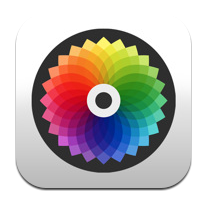
Color also landed a multi-year agreement with Verizon to pre-install the app on its Android phones a distribution deal most startups would consider a coup, giving Color a direct pipeline to millions of devices without spending a dollar on user acquisition. Between the funding record, the press cycle, and the carrier partnership, Color Labs looked, on paper, like a company that had already won before it had proven anything.
THE CRACKS APPEAR
Nobody Understood What the App Was For
Color’s core mechanic merging your camera roll with strangers standing near you required a critical mass of other users in the same physical location to work at all. At launch, that critical mass didn’t exist anywhere. A user could open the app at a coffee shop and see nothing happen, because the entire value proposition depended on network effects the app had no users yet to generate. The initial App Store rating settled at 2 out of 5 stars.
The Public Narrative vs. the Private Reality
Publicly, Color framed the confused early reception as a rollout problem something onboarding and marketing could fix. Privately, co-founders Nguyen and Pham gave a far more candid account in an April 2011 interview with technology writer Robert Scoble, admitting the launch had been mishandled at a structural level. Pham put it plainly: “We threw a mountain at people.”
The Exodus Begins
By June 2011- less than three months after launch Pham left the company for the Los Angeles startup incubator Science. DJ Patil, the chief of product, departed shortly after. Losing the company president and chief product officer within the same season, while the core product still hadn’t found its audience, meant Color entered its first real crisis with its two most senior operators already gone.
Active Users Never Materialized
By September 2011, six months after a launch preceded by the most-hyped funding round the tech press had seen that year, Color had fewer than 100,000 active users a number that would have been an unremarkable milestone for a startup with no funding at all, let alone one that had raised $41 million pre-launch. The company spent the following year pivoting: first toward a more conventional private photo-sharing model, then toward live video broadcasting through Facebook, chasing product-market fit it had never established the first time.
THE COLLAPSE
Nguyen Steps Back, Quietly
By the second half of 2012, Nguyen had effectively stopped showing up to Color’s Palo Alto office, reportedly absent for more than two months amid what sources described as intense strain between him and the board. He retained the CEO title but had stepped away from day-to-day operations, leaving a leaderless company still searching for a working product two years after its record-setting raise.
October 2012: The Denial
On October 17, 2012, VentureBeat reported that Color’s board and major shareholders had voted to wind the company down, citing an internal email allegedly sent to staff. Color and Sequoia Capital publicly denied it within hours, with a spokesperson stating flatly that the company was not shutting down. The denial did not hold for long.
November 2012: Apple Buys the Wreckage
By mid-November, multiple outlets confirmed Apple was acquiring Color Labs in what was widely described as an acqui-hire a deal aimed at absorbing roughly 20 of the company’s engineers and its patent portfolio, which included technology for sharing content across devices and a file format for HD video. TechCrunch later confirmed the price through sources close to the deal: $7 million, a fraction of the $41 million originally raised.
A Lawsuit, and the App’s Final Day
The acquisition became public partly through a lawsuit filed by former Color quality assurance engineer Adam Witherspoon, who alleged he had been deliberately excluded from the move to Apple and accused the company and Nguyen of fostering a hostile workplace allegations that were contested and never independently adjudicated in the public record. Neither Apple nor Color offered on-the-record confirmation of the deal at the time. The Color app itself was formally shut down on December 31, 2012, closing out a story that had run for less than two years from its record-breaking launch.
THE VERDICT: WHY DID THEY REALLY FAIL?
- The funding round created the hype before the product could earn it. A $41 million pre-launch raise generated press coverage and public expectations Color’s actual app untested, unproven, and dependent on a user base it didn’t yet have could never live up to on day one.
- The core mechanic required scale it launched without. Color’s proximity-based photo merging only worked with a critical mass of nearby users, which meant the app was functionally useless to almost everyone who opened it during the exact period it needed to build trust and habit.
- Leadership instability compounded the product problem. Losing the company president and chief product officer within three months of launch, followed by the CEO’s own extended absence a year later, left no consistent hand steering the company through a crisis it badly needed one for.
- The team optimized for a narrative, not a market. Spending $350,000 on a domain name and building an office for four times the actual headcount reflected a company positioning itself as already-arrived, rather than one still searching for what its users actually wanted.
- Repeated pivots signaled the absence of product-market fit rather than a route to it. Shifting from proximity photo-sharing to private sharing to live video broadcasting inside 18 months suggests a team reacting to failure rather than converging on a validated idea.
HOW THIS PROBLEM IS SOLVED TODAY
The clearest institutional response to Color’s failure sits inside Y Combinator and most modern seed-stage accelerators’ now-standard advice: “do things that don’t scale” and validate demand with a tiny, engaged user base before raising money at a size that creates public expectations a product can’t meet. That philosophy, widely credited to YC partner Paul Graham’s essays from the same era, treats a company like Color funded at a scale built for hundreds of thousands of users while still searching for its first hundred true fans as a structural warning rather than an aspiration.
Venture capital underwriting has also shifted materially since 2011. Seed and Series A rounds today are typically gated on demonstrated usage metrics, retention curves, or at minimum a working product in testers’ hands a contrast to Color’s entirely pre-launch, pre-product raise, which was unusual even by 2011 standards and is far rarer for a firm like Sequoia to repeat today.
Companies like Instagram, which launched the same year with a $500,000 seed round instead of $41 million, are frequently cited by founders and investors alike as the counter-model: build a small, working, lovable product first, and let usage data not press cycles justify the next round. Instagram’s acquisition by Facebook for $1 billion less than 18 months after Color’s collapse is the comparison most retrospectives reach for, precisely because both companies pursued the same category with almost inverse funding philosophies.
KEY LESSONS FOR FOUNDERS & INVESTORS
A large funding round is a liability before product-market fit exists. Money raised ahead of proven demand buys expectations, press scrutiny, and burn not the demand itself, which still has to be earned from actual users.
Network-effect products need a bootstrap plan, not just a vision. If a product only works once enough people are already using it, launching to a general audience before securing a dense pocket of early adopters guarantees an empty-room experience for nearly everyone.
Founder pedigree can open doors money can’t buy and close them just as fast. Nguyen’s prior exits secured the raise, but reputation alone couldn’t substitute for product validation once real users started opening the app.
Executive departures within months of launch are a five-alarm signal. Losing a company president and chief product officer that quickly should trigger an honest reassessment of the product and culture, not just a leadership reshuffle.
Repeated pivots without a stabilizing thesis rarely recover a company. Each shift Color made — private sharing, then live video treated the symptom of the moment rather than confronting why the original product hadn’t found its users.
FAQ — PEOPLE ALSO ASK
Q: Why did the Color app startup fail? A: The Color app startup failure came down to a product that only worked with a critical mass of nearby users, launched into a market where that critical mass didn’t yet exist. The $41 million pre-launch raise generated enormous press expectations the untested app couldn’t meet, and the resulting backlash made recovery even harder.
Q: What happened to Bill Nguyen after Color Labs collapsed? A: Nguyen stepped back from day-to-day operations at Color roughly two months before the company’s board voted to shut it down, though he retained the CEO title until the Apple deal closed. Public reporting does not clearly document a subsequent company he founded after Color, and further career details remain [UNVERIFIED].
Q: Could Color have survived if it had launched differently? A: It’s plausible Instagram, its closest competitor, launched the same year with $500,000 instead of $41 million and built a working, well-loved product before scaling aggressively. Color’s core problem was sequencing: it scaled expectations and headcount before validating that people wanted the product at all, a mismatch a smaller, slower launch might have avoided.
Q: What lessons can entrepreneurs learn from the Color Labs failure? A: The clearest lesson is that funding size should follow validated demand, not precede it a large pre-launch raise buys visibility and burn rate, not proof that users want the product. Founders building network-effect products in particular need a plan for the “empty room” problem before launching broadly, not after.
Q: Why did Sequoia Capital invest $25 million in an app with no users? A: Sequoia partner Doug Leone later said the firm believed Color represented a once-a-decade platform shift, reportedly telling the founders, “Not since Google have we seen this.” The firm’s confidence rested heavily on the founding team’s pedigree particularly Nguyen’s prior exits rather than on any usage data, since none existed yet.
BUSINESS GLOSSARY
Pre-launch funding round — Venture capital raised before a product is publicly available, valuing a company entirely on team, market size, and pitch rather than any usage data; Color’s $41 million round is one of the largest examples on record.
Network effect — A product that becomes more valuable as more people use it; Color’s photo-merging feature depended entirely on this, which meant the app delivered almost no value until enough nearby users had already adopted it.
Acqui-hire — An acquisition made primarily to bring on a company’s engineering talent and intellectual property, rather than to continue operating its product; Apple’s purchase of Color Labs for roughly $7 million is a textbook example.
Product-market fit — The point at which a product genuinely satisfies strong market demand, typically evidenced by organic growth and retention rather than paid acquisition or press coverage; Color never reached it before shutting down.
Series A — Typically a company’s first major institutional funding round following a smaller seed round; Color’s $41 million round functioned as an unusually large Series A raised entirely pre-launch.
Carrier distribution deal — An agreement with a mobile network operator (in Color’s case, Verizon) to pre-install an app on its phones, providing direct access to a large user base without traditional marketing spend.
Down round exit — When a company is ultimately sold for less than the total capital it raised; Color’s $7 million acqui-hire against $41 million raised is a stark example of this outcome.
Color Labs didn’t fail because its founders lacked talent or ambition it failed because $41 million bought a launch nobody was ready for, before the product had earned a single real user. The lesson isn’t “don’t raise big rounds.” It’s that funding size should follow proof of demand, not substitute for it.
Every Venture Graph case study follows the same pattern — big promises, real money, and a moment where the story breaks. If Color’s collapse got you thinking about how fast overfunded hype can unravel, Why Did Vine Failed? Twitter’s $30M App Collapse (2016), is the next one worth reading. For the next breakdown as soon as it’s published, follow @venturegraphofficial or subscribe below.